
MM Stitch: a store for personalised clothing
We created an online store for the MM Stitch brand, tailored for the sale of embroidered clothing and customizable products. We integrated an additional app for product personalization and set up email marketing automations.
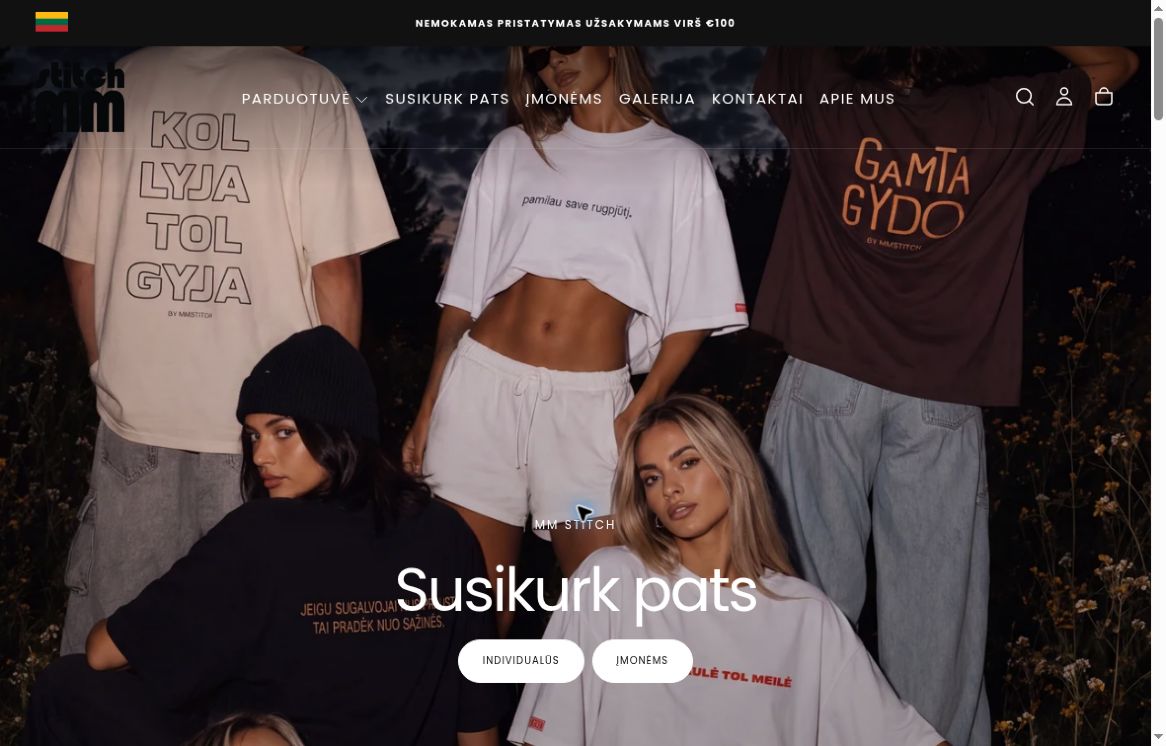
Project brief
Combine standard product purchasing with custom product selection in a single store, while maintaining clear brand presentation.
Our work
- Creating an online store from scratch.
- Integration of additional plugins for product personalization.
- Setting up email marketing automations.
Result
The store is designed for both collection products and personalized items. Email automations enhance the shopping experience and help maintain customer engagement.
When the shopper wants a custom piece
An embroidered garment can start with a ready-made collection piece or a request to personalise it. In the MM Stitch store, an additional app brings the customisation choice into the product journey. The brand can present standard pieces and products tailored to the buyer in one place.
From a garment to an embroidery idea
MM Stitch offers T-shirts, sweatshirts, caps and bags. The range also has embroidery themes such as animals, text and zodiac signs. A buyer might arrive with a sweatshirt in mind or simply know the motif they would like on a gift.
Where does personalisation begin?
Choosing a garment and adapting it for a particular person are two separate steps. We added a personalisation app to bring them together in the MM Stitch store. For a similar brief, it is worth identifying where someone selects an existing model and where they supply a personal choice. That distinction shapes the experience of buying personalised clothing.
What exactly is the customer ordering?
An embroidered garment combines two decisions. The first concerns an ordinary product with a size, colour and cut. The second makes it individual. A line of lettering can be the most important part of a gift even if it occupies only one line on screen. A single mistyped character matters. That makes reviewing the final selection an important part of assessing the personalisation journey.
A gift for two people makes a useful example. Both garments might have the same colour and size but carry different words. Before paying, the buyer needs to understand which text belongs to which garment. This distinguishes a quantity of two from two separately personalised items and gives a designer a concrete scenario to evaluate.
When does an example help?
A photograph can show where the embroidery sits and its scale on the garment. The written choices explain which details the buyer can change. For a gift, preparation information also matters before purchase. A real example order is a practical starting point for discussing all three questions.
Reading the order from the maker’s side
A useful review swaps roles. One person makes a sample selection. Another reads the order summary and describes the garment they would prepare. Can they identify the colour, size and exact wording without asking the buyer? Any uncertainty points to a choice that needs a clearer label. This is why personalised products deserve their own brief.
Related project
The Funkysteps footwear project also involves size and pattern choices. Comparing it with MM Stitch highlights the extra decision introduced by personalisation. Wording must stay attached to the correct garment even if another item of the same colour and size is in the basket. That is a practical scenario to discuss before choosing a personalisation app.