
Well Fed: a food subscription store
For Well Fed, we developed an online store with a subscription feature. Recurring orders are a key part of the food business, which is why we built the store with an integrated subscription solution for this project.
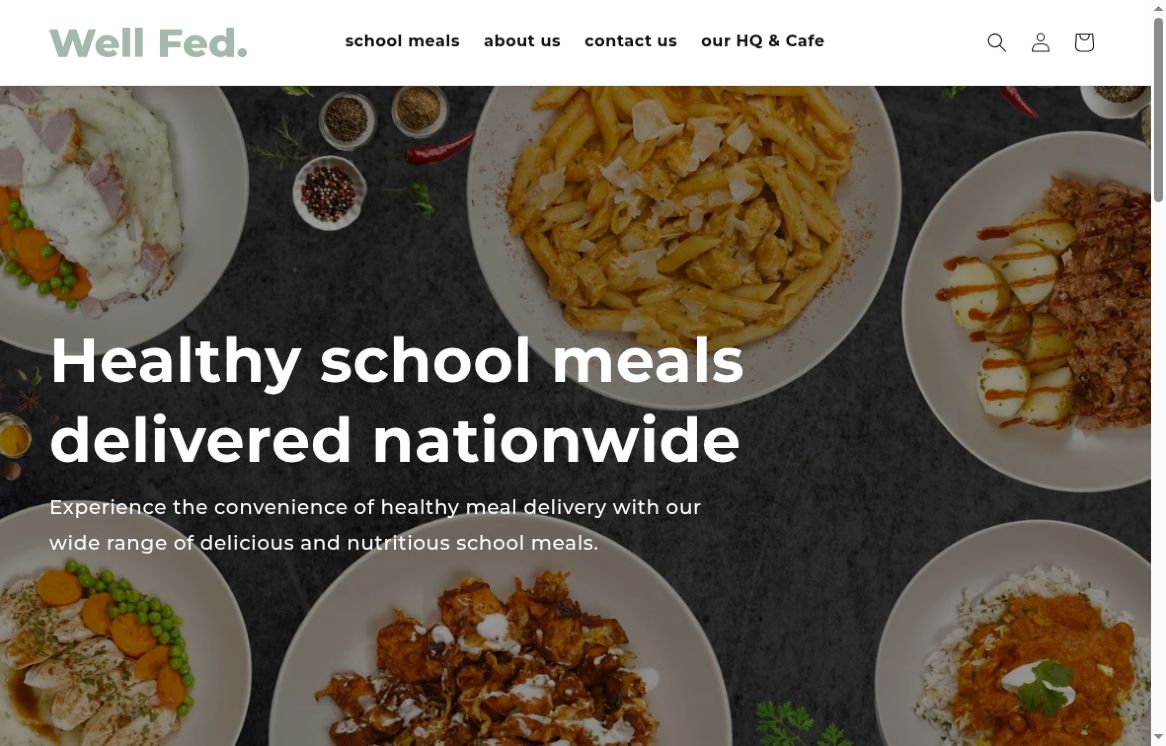
Project brief
Create an e-commerce framework designed not only for food selection but also for recurring orders.
Our work
- Creation of an online store.
- Implementation of subscription functionality.
Result
A store has been created that supports food ordering on a subscription basis. The brand has received an e-commerce solution tailored to its service model.
Ordering food regularly
For Well Fed, the purchase involves two decisions: what to order and whether to repeat the order. That made subscriptions part of the original store brief. The brand can present its food range and offer recurring orders within the same storefront.
Our online store development process
How is a meal subscription different from an ordinary basket?
The Well Fed shop invites visitors to pick their meals. For a single order, the immediate decision is simply what to eat. With a subscription, the buyer must also decide whether regular ordering fits their week. The same meal can therefore be part of a one-off purchase or the start of a routine.
What should a similar store brief cover?
Customers need to understand what they are choosing today and what will recur. These remain separate decisions even if they happen in the same visit. The Well Fed project illustrates why food subscription functionality belongs in the initial store brief, alongside the experience of selecting meals.
What is the customer planning alongside an order?
A typical week is a useful starting point for a meal subscription. One customer wants weekday lunches, another only needs help on a few busy days. The same food could suit both while quantities and frequency differ. A sample order should describe the meals and the days they cover. That gives the delivery interval a practical meaning.
A first-time subscriber is still working out whether the service fits their schedule. A returning customer may want to know what happens when next week changes. A similar offer should describe its actual change conditions and cut-off time in precise language. Comparing that wording on the product page and order summary helps reveal discrepancies.
Scoping a subscription
Bring two examples to a subscription brief. The first is a normal order that continues unchanged. The second is an exception, such as a week when the same person needs a different quantity. Together they clarify what the retailer actually offers and what the storefront needs to explain before the customer commits.
Making the delivery interval tangible
“Regularly” might mean every working week to one person and only part of a month to another. Mark the first and next expected orders on a calendar using the actual rules. If a prospective customer can mark the same dates after reading the offer, the wording works. Different answers reveal where frequency, delivery or payment need clarification.
Related project
Eatiful explores a related decision through meal bundles. Its case looks at the contents of a box, one-off and subscription choices, and the email that brings a customer to the offer. Well Fed is useful when starting from the weekly routine instead. Comparing them helps a merchant describe what arrives, how often and where the terms need to appear.