
Saula Lamps: a store for handmade lighting
For Saula Lamps, we created an aesthetic online store to showcase and sell handmade products. When presenting handmade lamps, the wood textures, natural shapes, and uniqueness of each item are essential. We designed the store as an online sales space for these products.
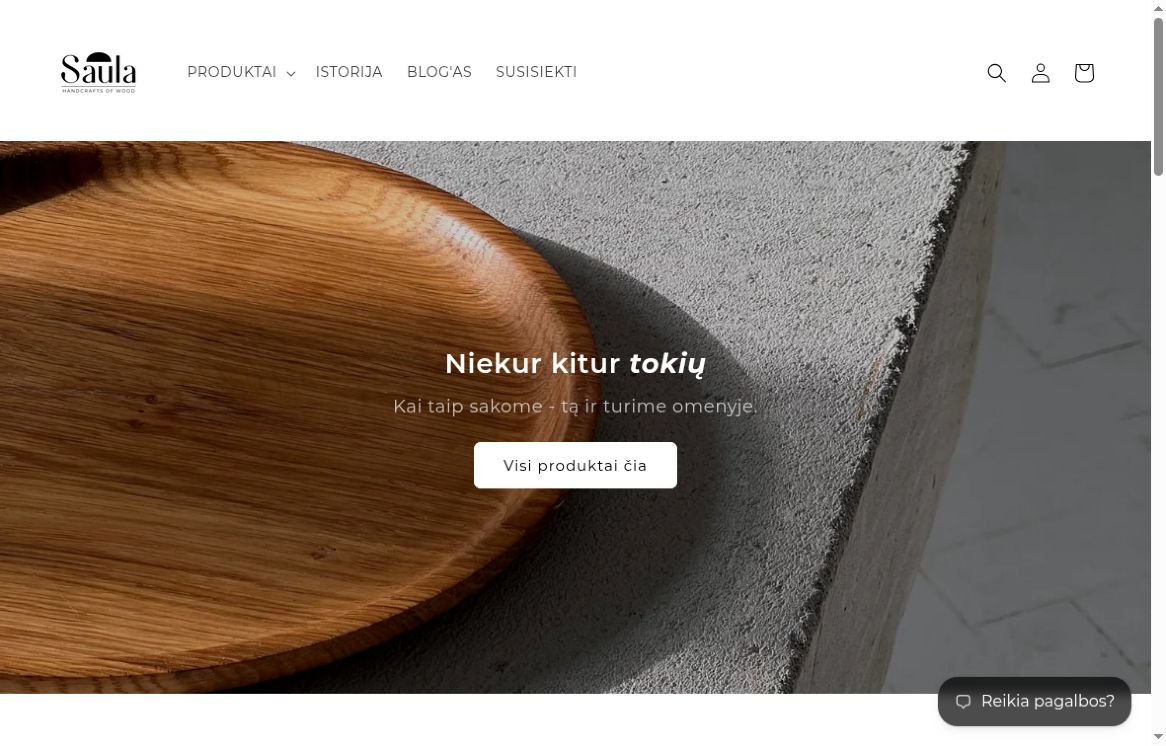
Project brief
Create a store whose appearance complements the aesthetics of handmade products and keeps the main focus on the items.
Our work
- E-commerce store development.
- Implementation of an aesthetic store direction.
Result
An e-commerce space created for the brand, where the presentation of products aligns with the aesthetic of Saula Lamps.
What a lamp photograph communicates
A handmade lamp is defined by more than its function. Its grain, silhouette and natural shape help a buyer imagine it in a room. The store’s aesthetic therefore had to suit the pieces themselves and keep the maker’s work at the centre of the shopping experience.
Store design and the buying journey
Lighting alongside other handmade objects
Saula Lamps presents vases and tableware alongside lighting. The pieces share an interest in materials, shape and craft even though they serve different purposes. A visitor who arrives for a lamp may want to explore the maker’s work more widely. The storefront’s visual direction therefore had to suit a collection rather than a single product type.
What helps a buyer choose a handmade lamp online?
A close view reveals the surface but can make scale hard to judge. A wider view shows the silhouette in a room but may lose a small handmade detail. Both perspectives matter when evaluating a lighting store. Can the buyer see the object itself, and can they imagine it at home? Those questions explain the emphasis on aesthetics in the Saula Lamps brief.
Showing the scale of handmade work
Someone may choose a hanging lamp for its shape and only later realise how much space it occupies above a table. A plain background shows the outline well but says little about its relationship to furniture. A room view gives the diameter meaning. For a lighting catalogue, physical dimensions and camera angle are worth considering together.
The appearance of the material matters too. Grain or natural form may vary between individual pieces. A buyer benefits from knowing whether the photograph shows the exact item or a representative example. This is especially relevant when buying a gift or choosing several lamps for the same room.
Questions for a lighting brief
Put a piece on a table and observe how someone examines it. They might turn it, look underneath or move closer to its surface. Online, a small set of deliberate photographs and captions has to do that work. Once the appearance feels right, the practical questions concern size, position and fit in the home.
Which photograph is missing?
A light has two distinct appearances. By day the shopper sees the material and silhouette. In the evening the question becomes how the lit space looks. Assign one question to each planned photograph. That makes it easier to decide whether the next useful addition is another picture, a dimension or a short explanation.
Related project
MIÒRK explores scale through mirrors and decorative objects. Lighting adds another question to the relationship between finish, shape and room: how the piece looks when switched on. The comparison is useful when briefing a collection shoot and deciding what each image needs to explain.