
Qpet: store design and subscriptions
We implemented a new design for the Qpet pet food store based on the provided Figma mockups. The project went beyond the store's appearance: we integrated third-party accounting systems and implemented a subscription feature for recurring purchases.
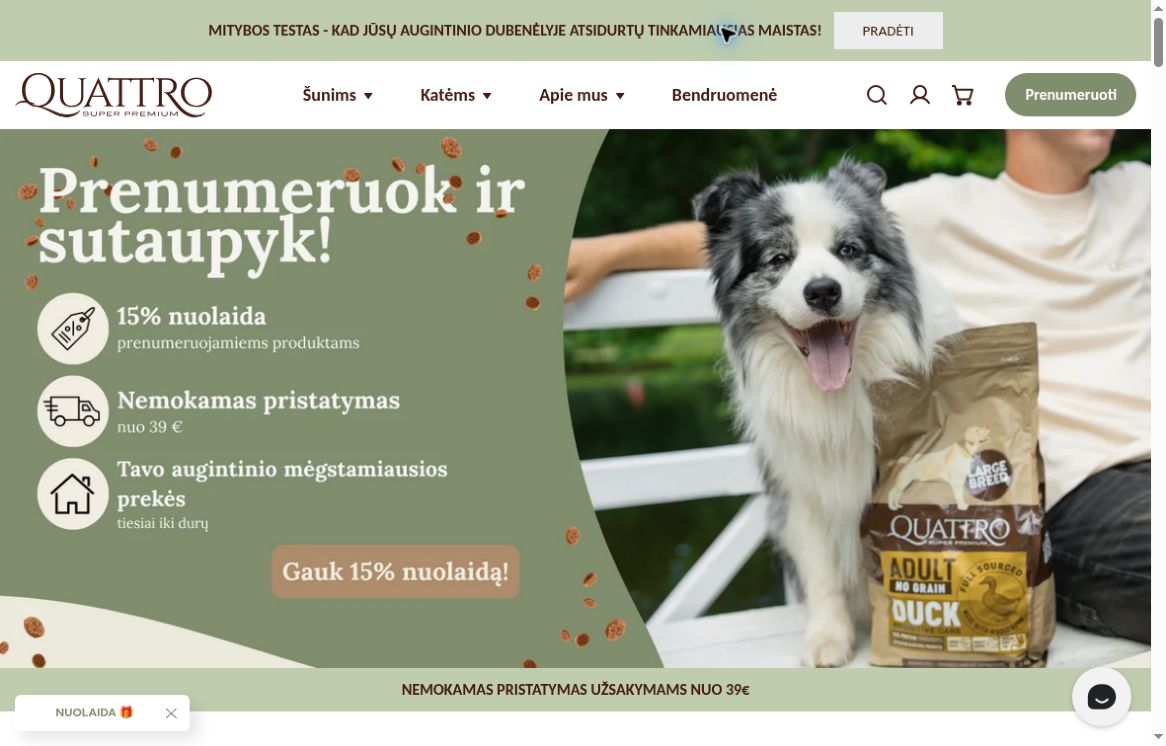
Project brief
Transfer the finalized design to a functional online store and align the customer experience with day-to-day business processes.
Our work
- Implementation of store design based on Figma mockups.
- Integration of third-party accounting systems.
- Implementation of subscription functionality.
Result
An updated online store that provides for both one-time purchases and subscriptions, with sales processes integrated into accounting systems.
One-off purchase or subscription?
One pet owner may want to try a food for the first time, while another orders the same product regularly. The Qpet store had to accommodate both decisions within the supplied design. Subscription functionality sits alongside the ordinary purchase, giving returning customers another way to keep their pet food in stock.
From a food sample to a subscription
Qpet lists samples alongside separate dog and cat food ranges. A sample and a subscription meet different needs. While an owner is still finding a suitable food, a single trial may be enough. Once the choice is settled, the practical question becomes how to keep the next supply on hand.
What had to work beyond the design mockups?
The Qpet store design started from supplied Figma layouts. Implementation also had to account for what the customer was ordering. Work on product variants and ingredient information matters in pet food because buyers need to identify the exact option and decide whether it suits their animal. A subscription makes sense once that first choice is clear.
How do pet owners read a food description?
Imagine an owner switching their pet to a different food. They first need to establish whether it is for a dog or a cat. They might then check the ingredients for a particular protein source before choosing a pack size. A subscription makes sense only once the customer knows exactly which product and variant will repeat.
A sample plays a different part from a full bag. It gives the owner a chance to try a flavour before committing to a larger purchase. One useful test is whether selecting a size displays the name and price for that exact size. The shopper should be able to tell whether they changed the quantity or selected a different product.
The first order and the next delivery
A one-off order can be judged from the basket in front of the customer. A subscription introduces time. Will that bag last until the next delivery? What does the owner need to know before choosing a frequency? Clear wording beside the product helps them decide whether a recurring order suits their pet.
Two different visits make a useful design test. A new shopper might read the entire ingredient list before trying a small pack. A returning buyer may know the flavour and size already. The same product page needs to support both a careful first choice and a familiar repeat purchase.
What to bring to a design review
Bring two pack labels for one food and several genuine questions about repeat orders. They reveal which facts are shared, which change with size and what the owner needs to know before choosing. Finally read both examples on a phone, where the ingredient list and purchase options compete for space.
Related project
Compare KGshop.eu for a different pet food purchase, where Lithuanian search suggestions and delivery details help the visitor move from the catalogue to a basket.