
Namų imperija: homeware store and email marketing
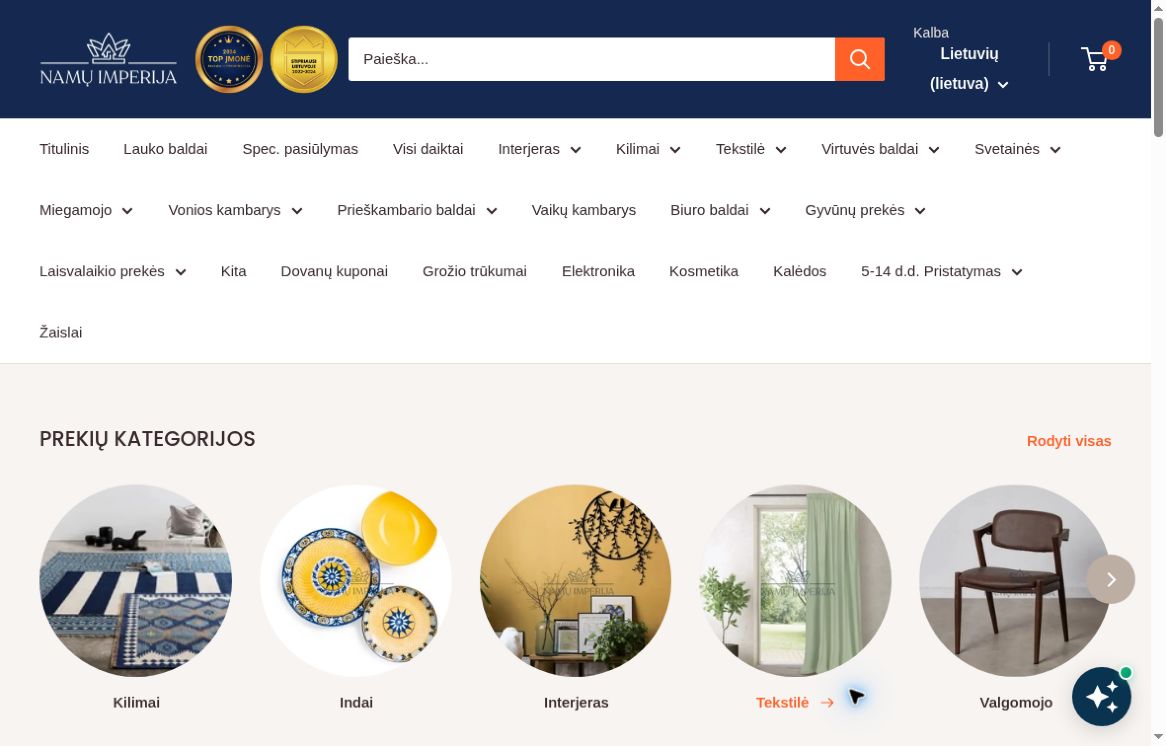
We created an online store and developed email marketing solutions for Namų imperija. The scope of the project covered various home goods categories: from furniture and textiles to decorations and everyday interior items.
Project brief
Create an e-commerce foundation for a diverse range of home goods and establish an additional customer communication channel.
Our work
- E-commerce website development.
- Preparation of email marketing solutions.
Result
The online store and email marketing are implemented as two complementary parts of the project: for selecting products online and maintaining communication with customers.
From furniture to finishing touches
Furniture, textiles and decorative pieces are not necessarily bought at the same time. Namų imperija needed a storefront that could accommodate all three and a way to stay in touch after a visit. Email marketing was therefore part of the project alongside the online store.
Email marketing for online stores
How can one store serve several rooms?
Namų imperija offers outdoor furniture, children’s room products and small interior details such as cushions and photo frames. One visitor has a specific item in mind; another is gathering several things for the same room. This store is interesting from both perspectives: the type of product and the space where it will be used.
When does communication after a visit matter?
A patio furniture decision can take much longer than choosing a picture frame. The store brings both purchases under one roof, while email gives the retailer a separate opportunity to reach a customer again. Homeware ecommerce and email marketing were the two elements of our Namų imperija project.
How do people look for homeware?
One shopper starts with a room they want to refresh. Another knows they need bedding and wants the right category immediately. A third is looking for a gift and may browse several collections. These journeys matter to a homeware retailer even though each visitor would describe their need differently. Review the catalogue both by room and by type of item.
Several pieces may appear as one arrangement in an interior photograph. That can inspire a shopper, but they still need to know what the price includes. Listing the saleable items in one styled scene helps a merchant decide which names and links will lead from the overall idea to an individual purchase.
Where should a collection email take its reader?
An email about bedroom ideas and a reminder about one bedspread serve different purposes. The first invites someone to explore a selection. The second should make it easy to recheck a colour or size. Choosing the landing page to match the email connects the two parts of this project.
Testing category names
Ask someone to find items from a shopping list using only the menu labels. A tablecloth might suggest dining to the customer and textiles to the merchant. That observation need not prompt a reorganisation. A relevant link between two collections can connect the different ways people think about the same item.
Related project
The e-Taumona store shows how the journey changes when the focus is a single room. Bathroom furniture brings dimensions and contents to the foreground. A broader homeware range may first need to help the visitor find the category. Comparing the examples helps a retailer decide whether the catalogue brief needs more work on grouping or on individual product information.